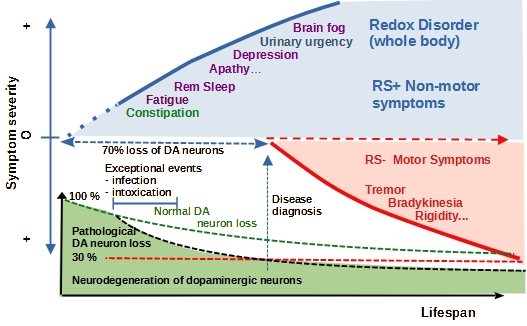
Explore the connection between the non-motor symptoms of Parkinson’s disease and mitochondrial dysfunction in the central nervous system, the gastrointestinal tract, and the lower urinary tract. See how the Redox Stress Test shows that non-motor symptoms in these three body systems all due to the same cause, oxidative shress and mitochondrial dysfunction.

4 responses to “What can we learn from non-motor symptoms?”
-
shared w dr. Laurie Mischley . glad to see you and the team are still at it, Albert!
-
Good to hear from you Amy. I hope you are doing ok.
The fight continues. We will not win until non-motor symptoms are recognized for what they are: the dominant symptoms of PD and the primary source of information to control PD.
Thanks for passing my message on to L. Mischley. So far nobody is taking any notice.
Albert
-
-
Great work Dr. Well done, doesn’t begin to describe what you’ve accomplished.
-

[…] The first pathology is oxidative stress, a metabolic disorder occurring at the cellular level. Oxidative stress occurs inside cells, affecting in particular the GI tract and the Lower Urinary tract and contaminating astrocytes and neurons in the brain. This disorder is chronologically associated with the occurrence of non-motor symptoms of Parkinson’s. It results from the formation of highly aggressive oxidizing chemicals (Reactive Oxygen Species, ROS) inside the mitochondria of cells in organs which have a high energy and oxygen consumption. These oxidants attack and damage the mitochondria which produce them as well as cell membranes and cellular DNA, ultimately leading to cell death. This is explained in more detail here. […]


 The Patient Researcher
Leave a comment